
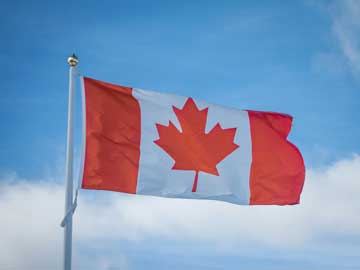
 I just discovered that I am a Canadian citizen.
I’m a Canadian because my maternal great-grandparents were born in Canada, as were generations before them. So, I’m automatically a Canadian citizen, by descent. (On my father’s side…? Almost 100% Irish. LOL)
If you might be Canadian by descent, too,
this page may help you claim your citizenship.
NOTE: Your parent OR a grandparent OR a great-grandparent must have been born in Canada.
And, you must have been born before 2025.
Records You’ll Need
>> To prove your claim, you must provide long-form birth certificates for every person in the chain of ancestors, including you, leading up to* your parent, grandparent, or great-grandparent born in Canada.
“Short-form” or wallet-sized certificates usually do not list parents’ names and are often rejected.
*Note: That is UP TO… not including your Canadian-born ancestry. For your Canadian-born ancestors, church records (baptismal, marriage, etc.) may be your best (or only) option, in some cases.
Though I am a professional genealogist (specializing in Irish-American ancestry), you can find those Canadian records yourself. (Note: At this time, I am not accepting new clients. Frankly, I’m focusing on art and writing.)

Find actual Canadian records here:
If you know the name (and relevant info) about your Canadian-born ancestor, the Canadian government records site is very helpful.
Especially for ancestors from Quebec, the Drouin Collection is tremendous.
To find (and document) your USA ancestry, start with these resources:
Ancestry.com is easily the best choice, but it’s not free. (I’m a lifetime member, making access super-easy.) From that site, I quickly found my family’s census records, Catholic records (marriages and baptisms) in the U.S. and Canada, and so on.
FamilySearch.org can be very useful, but do not rely solely on its results. Well-meaning individuals – many from the LDS Church that sponsors that site – have contributed information to it, and some of it wasn’t as well-researched as it might have been. So, double-check everything you find there, preferably with government or church records.
They also have a page listing other helpful resources: Canada Online Genealogy Resources.
LocalCatholicChurches.com can be helpful IF you know where your Canadian-descent ancestor was baptized. If you don’t, that site has external links that may be helpful.
If you struggle to find names, dates, etc., of your American ancestors, and need more info, this is a site I’ve used in my professional work: Find-A-Grave. Seriously, people often put biographical information on headstones. (Example: Many headstones of Irish immigrants not only list the birth and death dates… but also where in Ireland the person came from.)
But, with birth and/or death dates, and approximately where the person lived, census and other records can be a good starting point. Here’s where to find U.S. Census records: U.S. National Archives. (Do NOT trust the handwritten census info. Oh, it’s usually accurate. But sometimes, if the person wasn’t at home when the census-taker called, the info came from a neighbor… who simply guessed at what to say.)
ALSO… when you send your photo to Canada, make sure it’s the right size: https://alreadycanadian.com/canadian-citizenship-photos/ NOTE: That site is not entirely free to view, but a lot of the key info is visible. Think of it as a starting point, not a site I necessarily endorse, okay..?
(I’ll add more resources here as they occur to me, and as time permits.)
What you will need, based on how you apply
(The following was provided by the free version of Gemini.)
Applying for a Canadian citizenship certificate based on ancestry involves creating a “paper trail” that links you to your Canadian-born ancestors.
Following the passage of Bill C-3 (which took effect on December 15, 2025), the “first-generation limit” has been removed for many people. This means you may now be eligible for citizenship even if your parent and grandfather were born outside Canada, provided you can prove that your great-grandparent was a citizen.
Here is the breakdown of the documents you will need and the rules for certification.
Required Documents for Your Lineage
To prove your claim, you must provide long-form birth certificates for every person in the chain. “Short-form” or wallet-sized certificates usually do not list parents’ names and are often rejected.
Do documents need to be notarized or certified?
The rules depend on how you submit your application:
• Online Applications: If you apply through the IRCC online portal, you typically only need to upload high-quality color scans of your original, government-issued documents. You do not need to have the scans themselves notarized.
• Paper Applications: If you submit a physical application by mail, you must send certified true copies of your documents (not the originals). A “certified true copy” is a photocopy signed by an authorized person (like a Notary Public) who has seen the original and confirms the copy is accurate.
• Translations: If any document (such as an old parish record) is not in English or French, it must be translated by a certified translator. In this case, you would need a notarized affidavit from the translator.
Legal References (aka, footnotes)
These are additional resources I used to understand Canada’s recent legal updates, related to being Canadian by descent:
Here’s where some of my info comes from:

Getting Clarity on Canadian Citizenship
(This is a copy of a conversation I had with a friend, after ChatGPT gave him incorrect information.)
That form we submitted with the ancestral info, as well as what my ChatGPT says, and the immigration page (https://immigration.ca/claiming-canadian-citizenship-by-descent-under-canadas-new-citizenship-act-bill-c-3/), and the YT video that started me on this citizenship pursuit… all of them say, consistently, that – with a great-grand born in Canada, you & I qualify.
NOTE: Here’s the link to the free evaluation form: https://immigration.ca/free-canadian-citizenship-by-descent-assessment/
Per that immigration link, above…
“Canada has completed a long-overdue overhaul of its citizenship by descent rules. Bill C-3, An Act to amend the Citizenship Act, is in force, permanently ending the first-generation limit that prevented thousands of people worldwide from being recognised as Canadian citizens.”
Canada has now passed Bill C-3, marking a major shift in how citizenship is passed from Canadian parents to children born or adopted abroad. The new law removes long-criticised restrictions and creates a clearer, more consistent system for families with international ties.
Bill C-3 responds directly to the Ontario Superior Court ruling that struck down the first-generation limit as unconstitutional in 2023. The government accepted the ruling and has now enacted permanent reforms after months of interim measures, delays and deadline extensions. The law has received royal assent. It will take effect on a date set by order in council.
 The “date set by order in council” was in November 2025, and the law was passed. It has been given royal assent. That’s noted on the official Canadian Parliament page, here: https://www.parl.ca/legisinfo/en/bill/45-1/c-3?view=about
And finally, Parliament issued a related press release, linked from the page above. The text of it is here: https://www.canada.ca/en/immigration-refugees-citizenship/news/2025/12/new-citizenship-rules-for-canadians-born-or-adopted-abroad-are-now-in-effect.html
More references that, imho, have credibility:https://www.dentons.com/en/insights/articles/2025/december/19/bill-c-3-restores-canadian-citizenship-to-lost-canadians
Even in a Reddit thread (mostly by Canadians), one said,
“This law came into existence because the Ontario Superior Court of Justice deemed the first generation limit unconstitutional – look up “Bjorkquist decision Canada”. They cannot revoke this law unless they take it to court and that will take years and is very unlikely to result in full revocation…at most it could result in some tightening of eligibility requirements but I don’t see that as very likely either.”
“No, it cannot be revoked. It exists because having a generational limit is unconstitutional. It would take another lawsuit and a court determining otherwise to repeal it.”
(On every website that I’ve studied – the “unconstitutional” issue seems to be the key point that led to C-3.)
The original law (referencing 1947) was badly phrased, blocking automatic citizenship to descendants of Canadians who happened to be outside Canada at the time of their child’s birth. But, hey, it was 1947, Canada was a new “country” (with a new gov’t) instead of being just a possession of Britain, and people were still dealing with PTSD from WWII.
C-3 restores citizenship to those people – who, believing they weren’t Canadian citizens – generally stayed in the countries where they were born (and were automatically citizens of those respective countries).
And then their descendants did the same. So, they were separated, geographically, from their extended families… cousins, etc.
This law changes that.
It’s righting a wrong.