Stage Fright, Perfection, Flow, Teaching, and Art

Chairs for audience or students.Stage fright has been part of my life for as long as I can remember.  It’s very selective.  I’m fine in front of a crowd of thousands, especially in halls where the lights are on me and I can’t see the faces of anyone past the first row or two… and even they are too dark to see clearly.

Put me in front of an audience of 20 or 30 people, where I can see every face and every micro-reaction to what I’m saying…?  Panic. Total panic.  I have to steel myself to even think about that kind of public speaking.

That’s why, when I teach, I have a firm rule:  I need access to the classroom, in solitude, for at least 30 minutes before the students arrive.  (Otherwise, I’m likely to blurt all kinds of things… usually extreme and unexpected, if you’re not ready for the panalopy of creative ideas that rush through my mind like high schoolers rushing to class before the “late” bell rings.)

During my personal pre-class time, I give myself a “pep talk,” and use breathing techniques that would make Dr. Lamaze proud, to relax myself enough to teach.  With the right mindset — or at least mental distance from “not good enough” self-talk — I can teach a great class with lots of student involvement.

(Without exception, every class I’ve taught that fell flat… it’s because I wasn’t given that 30 minutes to prepare.)

Creating art can be a similar issue for me and many other people.  We may not have that visible audience, but when the initial spark of inspiration fades, the voice of the inner critic can be worse than any heckler in the classroom.

(You know that student.  She’s the one who sighs loudly and repeatedly. And, at the end of the class — when it’s too late to do anything about it — she tells you how deeply you’ve disappointed her, and how you really shouldn’t be teaching.  Or making art.  Or both.)

Regardless of where the message comes from, we’re often striving for impossible perfection… as artists and as teachers.  The slightest shortfall or flaw seems magnified on a big screen and in HD, and every metaphorical pore and blemish is the size of the Grand Canyon.

In fact, we’re often our very worst critics.  We hold ourselves up to impossible standards, and we’re usually using the wrong measuring stick.

Last night, I was disgruntled.  I’ve been working on a series of small (5″ x 7″) oil paintings, based on memory and photos I’ve taken.

Unfortunately, the results are — so far — uninspired. (I’ll get back to that in a minute.)

Pandorica-inspired ink drawing

Click to download the ATC file. (Original is 5″ x 8″.)

So, I took out my pen and paper, and started doodling one of my Pandorica-inspired pieces. (The Pandorica is a Dr. Who story element.)

I was so caught up in it, I let it run to the edge of the page.  And then, I felt so disappointed, because that meant the piece would require an additional, larger support, just to be matted.

This morning, my husband pointed out that it’s a perfectly good work of art, as it is, and there are worse things than needing something in back of the work so it mats well.

He also reminded me that art is about the inspiration.

That gets me back to my paintings… the ones that aren’t turning out.  I said that they aren’t inspired, and I mean exactly that: I’m working on them, production-style.  By definition, that’s an industrial approach. (Yes, I am reading Seth Godin’s The Icarus Deception.  It’s brilliant, inspiring, and terrifying, all at the same time.)

So, I went back to my Pandorica doodles.  I’m waiting for this evening’s sunset, hoping the colors will be inspiring enough to spark (and complete) some or all of the six little paintings currently on my easel.

I want to take them with me to M.I.T. next week, when we’re hearing Seth Godin speak and participating in whatever’s going on at that event.  I’d like to hand out art, at random, in kind of a random acts of kindness gesture.  In other words, just for fun.

But… I feel a little stuck.  And, I’ve been trying to work with a deadline more than inspiration.  Bad idea.

It’s compounded by my fear of disapproval, or — worse — no reaction at all.  Boredom.  Kind of a “What, you think you’re an artist…?” reaction, as they drop the art in the trash.  (Have I mentioned how well I can awfulize when I’m in this mode…? *chuckle and sigh*)

Okay. I’m not sure if this is more stage fright or the visual equivalent of writer’s block.

Either way, it’s putting the emphasis on the finished work and others’ opinions — even their potential opinions, if it’s work I haven’t shown anyone — instead of where it belongs, on the inspiration, and the creative expression that results.

But, what I’m describing in angst-laden terms is how we, as artists, make ourselves tiny and insignificant.  And, it’s why we often stall and lose precious time in which we might be making art.

It’s a toxic, all-or-nothing approach.  It’s so far from being in flow — in the creative process where we’re in touch with the sublime — we couldn’t find it with a road map, a compass, and a laser-tuned GPS.

The teaching…?  I quit, years ago. Yes, that’s letting small-minded people win, but that’s okay with me.  It’s a battle I never wanted to fight.  I’m happy to leave those political games to others who savor them.

The art…? That’s another matter.  Recovering my willingness to be creative, out loud… thats why I changed this website back into the blog it was in the first place, back in 1995 or 1996, when I began it.

And, it’s why I’m staring down virtual stage fright, posting last night’s Pandorica piece here, as a graphic and as an ATC you can download (and print at 300 dpi). Click on the illustration, above and on the left, to print your own copy.

Journals as Story Bibles

When I’m not working on art, I’m usually researching and writing books.  Well, that or baking bread or cookies… or indulging in a movie or a TV series like Downton Abbey. 

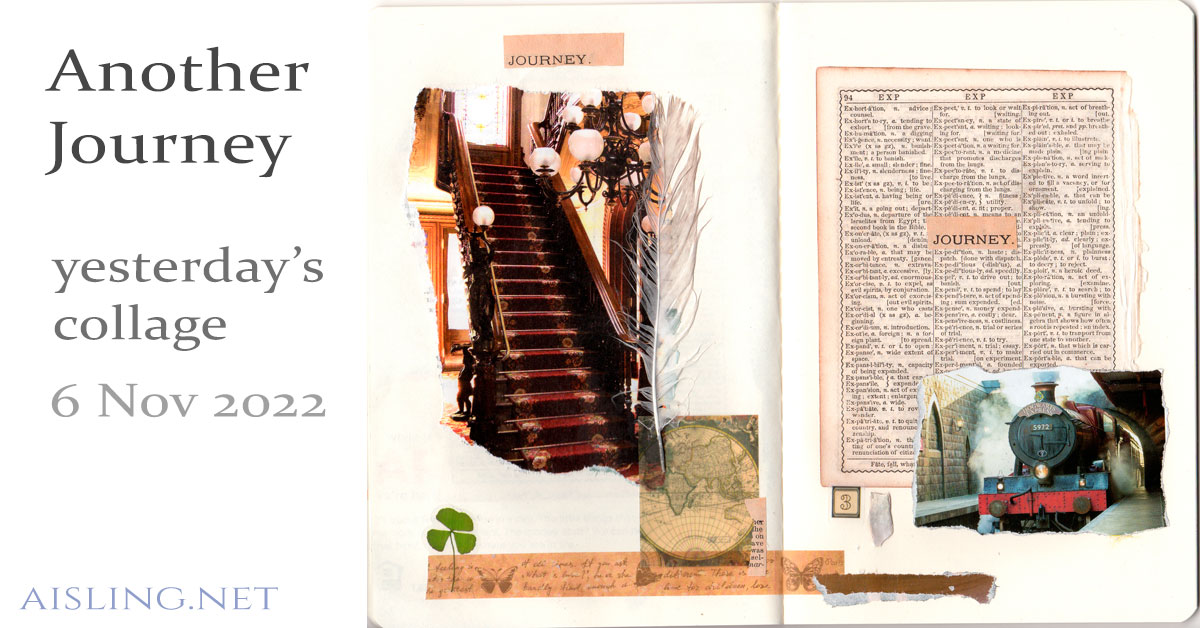
Anyway, as I was cruising through some Google+ communities I’m in, I saw a link to journaling as a way to build a book.  (Specifically, she’s talking about a novel, but I’m sure this could be adapted to nonfiction, as well.)

If this idea interests you, the best place to start is here:

Writing in a journalCreating a Story Bible: The Basics

“Writing a novel isn’t easy. Tracking your world, your characters, and other important events can save you time and save you from plot holes before you even write them into existence.” click here to read more at that website.

I’m experimenting with writing-related software that will catalogue details similar to what she describes in that journaling approach.

However, there’s something rich and juicy about using pen-and-paper as much as possible, when writing.

Oh, I’m still using my keyboard to compile my books.  The ease of working with voice recognition software — so I don’t have to type anything, if I don’t want to — is a time-saver and avoids ye olde carpal tunnel issues.

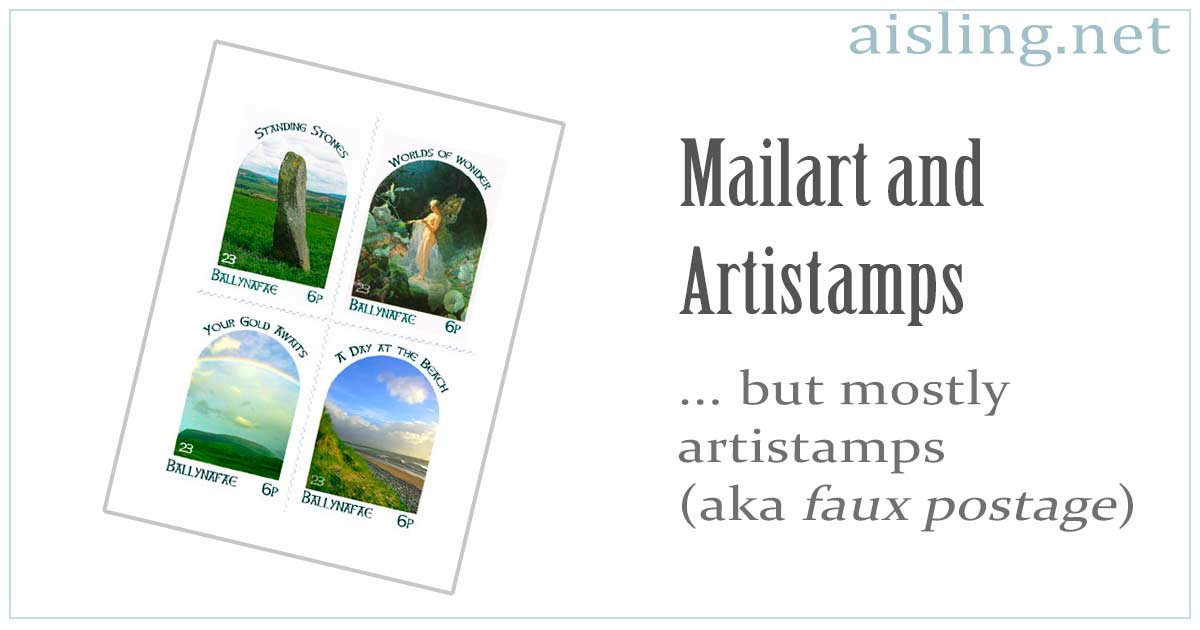
But, anyway, I’m always interested in diverse ways to use journals for creative purposes.  And, this might be a great starting point for a journal about an imaginary realm for artistamps.

Tuning Forks and Resonance

Wine glass - resonance testsSeveral people commented — here and at social media — about my tuning fork story.

I’ve seen the same thing demonstrated since, in real life, so I went looking for videos about it… and found some.

The first video shows the basic concept.  Tap one tuning fork, and a second one — with the same natural frequency — will vibrate, as well.  That’s sympathetic resonance.

Resonance

It also works with other sounds, and other materials.  The classic is a wine glass, broken by someone singing.

Here’s a kid breaking a wine glass with his voice. (I love his excitement when he actually does it… but it’s also a reminder to take safety precautions if you try this.)

Breaking A Wine Glass With Voice Like Mythbusters

And, if you’d like to see the Mythbusters episode with the glass breaking, you can either skip down to the third video in this sequence, for the result of the tests, or watch all three videos to learn a lot more about resonance.

Here’s part one of three:

http://www.youtube.com/channel/UCmJuoLkRyCyupDlqzFngDlA?feature=mhee

Here’s part two of three:

http://www.youtube.com/channel/UCmJuoLkRyCyupDlqzFngDlA?feature=mhee

Here’s part three of three:

http://www.youtube.com/channel/UCmJuoLkRyCyupDlqzFngDlA?feature=mhee

And, here’s a science experiment — with an explanation of resonance — in a college classroom. You may want to turn your speakers down, for this:

Resonance Experiment

Finally, here’s one art application for this phenomenon.

If you’ve never seen how sand (or other particles) form patterns from sound, here’s an experiment you can see at the Boston Museum of Science (MA), and probably a lot of other science museums.

Warning: For this, you’ll definitely want to turn down the volume on your speakers.

Resonance Phenomena in 2D on a Plane

Our Charlie Brown Christmas Tree – 2012

This year, we chose some real, alternative Christmas tree options.  We had two trees in our living room. (I’ve always preferred to have more than one tree for the holiday season.)

One “tree” was actually a bunch of small branches, arranged in a large glass jar, so they looked like a small Christmas tree. I picked up those branches at a nearby Christmas tree lot, where they had a stack of extra, odd-shaped branches in a pile to go to the trash.

We decorated that arrangement with all the normal Christmas-y things, including a lot of small, sparkly, multicolored ball-type ornaments. The size suited the small scale of the tree design.

To visitors, it looked like a normal, small (2 – 3 foot tall) Christmas tree.  We liked re-purposing discarded branches to create it.  It felt very “green,” on several levels.

Our other tree involved some serendipity.

Aisling's 'Charlie Brown' Christmas tree 2012.I was out for a walk, and noticed a wonderful, large branch by the side of the road.  It was about four feet tall, and I think it had been pruned from someone’s pine tree.

I brought it home and found a really large, gold, globe-type ornament to hang on it.

(It drooped, naturally.  It’s the way the branch had curved on the original tree… it’s not sagging or anything.)

The effect was almost exactly like the little tree in the Charlie Brown Christmas Special.

I propped it against the wall, in a shallow bowl of water.  It lost absolutely no needles during the holidays, and it’s still pretty soft & flexible, now.

This afternoon, I’m taking this little tree and our jar of branches to the nearby woods, so the branches return to nature.

These were among my favorite Christmas trees ever, and no trees were killed (or money spent) to enjoy them in our home.

I think this is the beginning of a tradition in our home, and it just sort of happened this year, because I wanted a couple of small trees that fit the size of our apartment.

Free Adobe CS2 Download

1335487_check-boxToday — and I don’t know for how long — Adobe is offering a free CS2 download.  You will need a (free) Adobe account, and CS2 is an old version of Creative Suite, but that’s okay.

Here’s the link: Free Adobe CS2.  You can download the software for PC or Mac. (I don’t know anyone who’s been able to get through to Adobe’s overloaded server, as of noon.)

Keep in mind: CS2 runs on WinXP.  To run some WinXP programs on Windows 7, you’ll want the Windows XP Mode for Win7: Download Windows XP Mode.